
A high-rub-count fabric reaches the final lounge review looking like the safe choice. Then the buyer asks four purchase-order questions: Will the face pill, will tailored seams move, will the color transfer, and can housekeeping use its current spotter without damaging the finish? Until those answers agree, the abrasion number does not establish commercial upholstery fabric durability.
Commercial upholstery fabric durability is not established by double rubs alone
Commercial upholstery fabric durability requires separate evidence for abrasion, appearance retention, seam behavior, dye transfer, and cleaning compatibility. One persuasive abrasion result cannot clear a fabric that pills, shifts at a tailored seam, crocks onto clothing, or conflicts with the property’s cleaning process.
| Performance question | Required report detail | What the result cannot prove |
|---|---|---|
| Abrasion: How does the surface withstand controlled rubbing? | Method, specimen direction, abradant, endpoint, finish, backing, laboratory, test date, and result | Pilling resistance, seam integrity, dye stability, cleanability, or service life |
| Pilling: Will fibers form visible pills or objectionable surface change? | Test method, grade, specimen condition, finish, backing, and grading reference | Resistance to yarn movement, staining, or abrasive wear-through |
| Crocking: Could color transfer through rubbing? | Test method, dry and wet grades, colorway, finish, and grading scale | Colorfastness to light, cleaners, disinfectants, or spills |
| Seam slippage: Will yarns move beside a sewn seam? | Method, direction, applied force, seam construction, backing, and result | Performance with a different thread, stitch density, tension, or furniture profile |
| Cleaning compatibility: Can housekeeping use its actual products and process? | Current care sheet, approved products, dilution, contact time, rinsing, drying, and prohibitions | Compatibility with an unlisted spotter, disinfectant, extraction process, or topical treatment |
Wyzenbeek double rubs and Martindale cycles answer method-specific questions
Wyzenbeek and Martindale results belong in separate specification fields. ASTM identifies ASTM D4157-13(2017) as the oscillatory-cylinder abrasion method commonly associated with Wyzenbeek double rubs. ASTM identifies ASTM D4966-22 as the Martindale abrasion-tester method, which reports cycles. Both linked editions are marked historical, so the project team should confirm the current edition with the laboratory rather than copying an old specification.
Commercial upholstery fabric durability is not established by double rubs alone shown as an editorial planning reference.
Wyzenbeek double rubs and Martindale cycles should not be converted or ranked as equivalents. ASTM notes that D4157 results depend on fiber dimensions and mechanical properties, yarn structure, fabric construction, finishing material, abradant action, specimen tension, pressure, and dimensional change. The evaluation method and operator judgment can also affect the measured relative abrasion.
ASTM describes the Martindale method as widely used, especially outside the United States, while cautioning against relying on D4966 alone for commercial-shipment acceptance. The purchase record should preserve the reported method, abradant, endpoint, specimen condition, and result instead of reducing the report to a single marketing number.
A rub-count requirement must match the seating location and upholstery construction
The buyer should set the abrasion requirement only after identifying the application: hotel guest-room chair, public lounge sofa, restaurant banquette, or frequently used residential seating. Occupancy, cleaning frequency, food and beverage exposure, children, pets, and anticipated misuse change the review. Placement on a seat, inside back, outside back, arm, welt, or decorative panel also changes the demand placed on the textile.
The approval file should identify the mill, pattern, colorway, fiber content, finish, backing, and current production status, then reconcile the owner standard with the furniture maker’s COM requirements. The Association for Contract Textiles performance guidelines treat test results as controlled laboratory evidence. ACT certification marks on ACT-member sampling indicate that the fabric meets or exceeds applicable contract standards, but the team must still confirm that the guidance matches the proposed construction, application, and indoor or outdoor use.
Once abrasion clears that application-specific gate, the next question concerns visible appearance: will the selected surface pill or transfer color after installation?
Pilling and crocking tests protect upholstery appearance after installation
Pilling and crocking require separate review wherever upholstery will receive repeated body contact, dark denim, housekeeping friction, or damp wiping. Pilling records surface change; crocking records color transfer caused by rubbing. The specification must name the method, result, colorway, specimen condition, and project acceptance criterion.
Pilling and crocking tests protect upholstery appearance after installation shown as an editorial planning reference.
- Bouclé, chenille, brushed, and mélange surfaces: Request a pilling report for the exact pattern, finish, and backing proposed for production.
- Dark or saturated colorways: Obtain dry and wet crocking results for each selected color rather than relying on another colorway from the same pattern.
- Denim contact: Review lounge chairs, banquettes, desk chairs, and guest-room seating for upholstery-to-clothing and clothing-to-upholstery transfer.
- Damp housekeeping procedures: Compare wet crocking results with the property’s cleaning method and cloth.
- Topical finishes and backings: Confirm that the tested specimen included the treatment, finish, and backing named in the purchase specification.
An upholstery pilling test must report the method as well as the grade
An unlabeled pilling grade does not support approval. ASTM D3511 evaluates pilling and related surface change with a brush-pilling procedure, while ASTM D4970 uses a Martindale tester. The finish schedule should record the applicable standard and edition, exposure point, assigned grade, photographic rating reference, test date, specimen identity, colorway, finish, and backing.
The buyer should compare that complete result with the current acceptance grade set by the owner, furniture maker, or applicable ACT criterion. Do not transfer a grade between methods or accept a mill summary that omits when and how the grade was assigned.
Disputed Martindale abrasion evidence in the same approval file also needs disciplined resolution. ASTM D4966 calls for the laboratories’ average results to be compared using Student’s t-test for unpaired data at a probability level selected by both parties before testing. If the comparison finds bias, the parties must correct its cause or interpret future results in light of the known bias.
Crocking results identify dry and wet dye-transfer risk
AATCC TM8 crockmeter results, or AATCC TM116 results when the supplier uses the rotary vertical crockmeter method, should identify separate dry and wet ratings for the selected colorway. The report should also name the grading scale and specimen condition. Manufacturer restrictions concerning excess dye, denim transfer, wet cleaning, or aftermarket treatments belong beside those ratings.
Once appearance risks are documented, the purchase-order decision still has a structural question to resolve: whether the fabric will remain stable at seams, welts, and tailored curves.
Upholstery seam slippage must be checked before fabric is approved for tailored seating
Upholstery seam slippage deserves a stated requirement when fabric will be pulled tightly over cushions, curved backs, arms, or welted edges. The result concerns yarn movement near a seam, not surface wear, so final approval must also address weave, backing, seam allowance, stitch density, thread, and the furniture maker’s upholstery method.
ASTM D4034 results must be tied to the proposed upholstery assembly
An ASTM D4034 report should identify the exact fabric construction, colorway, finish, and backing tested. The specification should cite the applicable edition and record the project acceptance criterion under ASTM D3597, where applicable, or a criterion agreed upon by the purchaser, fabric supplier, and furniture manufacturer.
- Verify the laboratory record: Record test direction, applied force, seam construction, measured yarn displacement, specimen conditioning, finish, and backing.
- Verify the proposed seam: Record seam type, seam allowance, stitch density, thread type, needle size, welt construction, and expected upholstery tension.
- Obtain maker review: Require written confirmation that the tested configuration is relevant to the frame, curves, cushioning, channels, tufting, and tailoring proposed.
- Resolve missing relevance: If the report covers unbacked fabric but production requires backing, or uses a seam unlike the maker’s seam, hold approval until the production assembly receives further review.
ACT guidance reinforces that the applicable criterion depends on fabric construction, intended application, and indoor or outdoor use. A passing result should not become a blanket guarantee for every furniture form.
If purchaser and supplier dispute Martindale acceptance results, ASTM D4966 directs them to use specimens that are as homogeneous as possible and to assign equal numbers randomly to each laboratory for comparative bias testing. That control does not replace seam testing, but it prevents unrelated abrasion-report disagreement from becoming an informal basis for releasing the fabric.
A production mockup verifies seams, welts, curves, and pattern placement
A full-scale upholstered mockup is prudent for tightly tailored, curved, channeled, tufted, or welted seating. The mockup should represent the most demanding component, such as a curved inside back or boxed cushion corner, using production fabric, backing, interliner, foam, thread, and welt materials.
- Inspect seams under normal upholstery tension for opening, yarn movement, puckering, and needle damage.
- Check welts and curves for rolling, distortion, or exposed backing.
- Review pile direction, pattern alignment, and transitions between adjoining components.
- Compress and release the upholstered area, then inspect recovery and seam appearance.
- Record the approval authority and deadline before production release.
The purchase order should assign responsibility for a failed mockup among the purchaser, fabric supplier, and furniture manufacturer. Once the assembly passes, the next question is chemical rather than structural: performance fabric cleaning codes still do not prove compatibility with the property’s cleaner or disinfectant.
Upholstery seam slippage must be checked before fabric is approved for tailored seating shown as an editorial planning reference.
Performance fabric cleaning codes do not prove cleaner or disinfectant compatibility
Performance fabric cleaning codes provide basic maintenance direction, but they do not establish compatibility with every spotter, extraction chemical, bleach solution, or disinfectant. Before purchase, the specification should attach current product-specific instructions, identify approved chemistry and concentrations, preserve warranty conditions, and match the operator’s housekeeping protocol.
A cleaning code describes a method category rather than universal chemical resistance
A W, S, WS, or X label generally identifies a cleaning-method category, not blanket resistance to water, solvents, bleach, disinfectants, heat, or aggressive brushing. The manufacturer’s definition controls, so the buyer needs the care sheet for the exact pattern, colorway, finish, and backing, including its revision date.
- Verify the approved-product list: Record active ingredient, concentration, contact time, rinse requirement, drying method, and frequency limit.
- Resolve bleach claims: Require written dilution, application, rinsing, and drying instructions rather than relying on a broad “bleach cleanable” description.
- Record restrictions: Note prohibited chemicals, extraction limits, temperature or heat limits, brushing restrictions, and complete-drying requirements.
- Protect the warranty: Review exclusions for stains, improper cleaning, finish degradation, color change, third-party treatments, and disinfectant use.
- Clarify conflicts: Obtain written manufacturer direction if the cleaning code, care sheet, approved-product list, and warranty do not agree.
Cleaning chemistry also belongs in the indoor-air plan. The U.S. Environmental Protection Agency identifies cleaning products and furnishings among common indoor sources of volatile organic compounds. The EPA recommends increased ventilation while people use products that emit volatile organic compounds indoors.
Housekeeping compatibility should be confirmed before the upholstery purchase order
The operator becomes the strongest decision-maker when housekeeping joins the review before COM approval or purchase-order release. Ask the facilities lead to provide the property’s spotters, disinfectants, equipment, contact-time practices, extraction procedures, and drying conditions while fabric alternatives remain available.
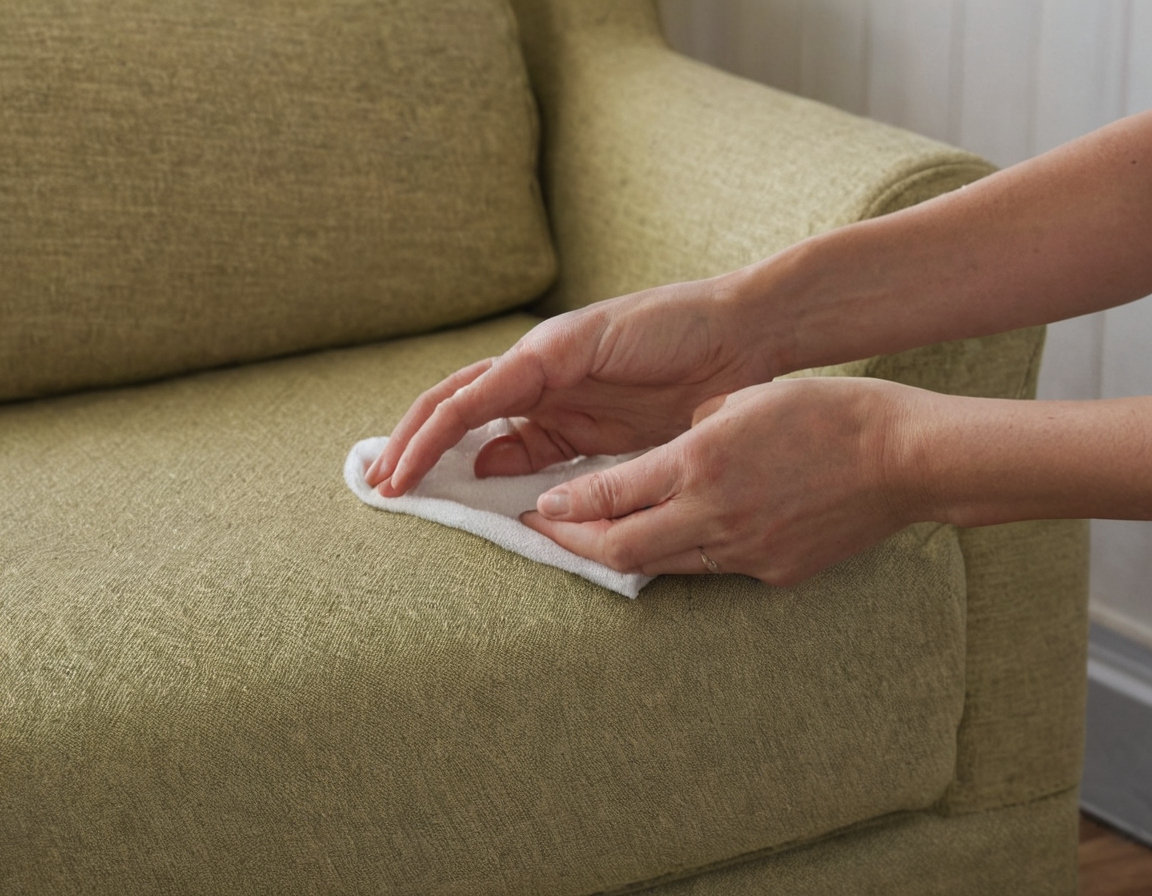
Performance fabric cleaning codes do not prove cleaner or disinfectant compatibility shown as an editorial planning reference.
- Collect current product labels and safety data sheets for chemicals used at the property.
- Send the proposed protocol to the textile manufacturer and request written compatibility confirmation.
- Trial the approved process on a production-representative sample with the specified finish and backing.
- Inspect the dried sample for color change, transfer, texture change, rings, residue, finish damage, and odor.
Every result, limitation, document revision, and approval source must now enter the upholstery specification so the purchase decision can survive substitutions and staff changes.
An upholstery specification should record every test result, condition, and approval source
A useful upholstery specification records more than a generic performance label. For each fabric and furniture application, the schedule should identify the product, location, test method, reported result, project requirement, care documents, warranty, and approval status. That shared record gives design, purchasing, fabrication, and operations one performance baseline.
The product record should list manufacturer, pattern, colorway, fiber content, width, repeat, railroad status, finish, backing, and country of origin. The application record should add furniture item, upholstered surface, quantity, required yardage, cutting direction, and COM approval reference. Attach the report date, laboratory or reporting party, sample identity, finish condition, and document reference.
The schedule should also classify the material correctly. ACT defines woven fabrics by perpendicular interlaced yarn groups and knit fabrics by interlocking yarn loops. ACT describes coated fabrics as a substrate carrying one or more film-forming polymer layers, such as vinyl or polyurethane, on the wear surface. Those constructions do not share identical application assumptions.
The upholstery schedule needs pass, fail, verify, and not-applicable fields
Each performance line needs a project criterion, reported result, required or advisory designation, status, responsible reviewer, and approval date. Record ASTM D4157 double rubs and ASTM D4966 Martindale cycles in separate fields without conversion. In D4966-22, “22” indicates the year of original adoption or the last revision. The schedule should preserve that edition information rather than listing only “Martindale.”
Add the pilling method and grade, seam-slippage method and result, and dry and wet crocking ratings. ACT certification categories address flammability, wet and dry crocking, colorfastness to light, physical properties, and abrasion, but ACT describes its criteria as minimum requirements that can change and may not satisfy every jurisdiction.
Blank cells are not approvals. Mark unavailable evidence “verify,” request supplemental testing, and record who will resolve it. Use “not applicable” only with a stated reason. Design, purchasing, furniture manufacturer, housekeeping, and owner signoffs need dated fields.
Fabric substitutions must repeat the complete durability review
A substitution request should arrive by the procurement deadline with current test reports, care documents, warranty, and a sample large enough to judge texture, scale, color, and repeat. Compare cost, lead time, minimum order, dye-lot availability, finish, backing, and warranty before approval.
A higher rub count cannot compensate for weaker pilling, crocking, seam, or cleaning evidence. ASTM D4966 cautions that between-laboratory precision can be poor and technicians may not obtain agreeing results on the same type of instrument. The final approver should release an alternate only after every listed criterion passes.
A staged approval workflow controls upholstery failure without overspending
A staged upholstery review keeps testing costs proportional to project risk. Begin with complete mill documentation, escalate questionable fabrics to supplemental testing, and reserve full mockups for repeated quantities, high-tension forms, demanding cleaning programs, large purchases, or installations where replacement access and downtime carry substantial cost.
The upholstery approval sequence runs from documents to sample to mockup
- Classify the use: Record quantity, location, installed value, cleaning frequency, replacement access, and expected service conditions.
- Review documents: Confirm that reports, care instructions, warranties, finish, backing, and colorway match the proposed material.
- Review samples: Examine the memo and cutting-for-approval sample for surface character, stretch, repeat, dye-lot consistency, and compatibility with adjacent casegoods and finishes.
- Submit COM or COL: Obtain the furniture manufacturer’s written approval, including requirements for backing, railroad direction, seam placement, or added yardage.
- Resolve performance questions: Commission current tests where reports remain incomplete, then conduct a cleaning trial with the property’s spotter and procedure.
- Approve fabrication: Use a production-representative mockup where tailoring or replacement exposure warrants it, then close every assigned approval gate before release.
Replacement exposure determines where testing and reserve yardage earn their cost
Repeated lounge chairs, guest-room seating, and custom banquettes justify greater review than an accessible one-off piece because a failed selection can create widespread downtime and visible dye-lot mismatch. Compare testing, protective-finish, overage, freight, storage, and future replacement exposure before approving the least expensive initial option.
Reserve yardage should reflect pattern repeat, dye lot, furniture quantity, minimum reorder, continuity needs, and the repair strategy. Assign ownership of attic stock and specify clean, dry, climate-appropriate storage. To keep these decisions visible, separate testing, mockup, and replacement-reserve lines in the renovation estimate.
The changed decision standard is straightforward: approve each upholstery selection only when its application-specific evidence, fabrication consent, cleaning method, and replacement plan agree.
Frequently asked questions
How many Wyzenbeek double rubs are appropriate for hotel or residential upholstery?
Use the current owner standard, furniture maker requirement, and applicable ACT criterion for the specific location. A public lounge, guest-room chair, restaurant banquette, and residential sofa do not present the same use or cleaning conditions. The specified number should remain tied to ASTM D4157, its test conditions, and the tested construction.
Is 30,000 double rubs enough for a sofa or lounge chair?
The number alone cannot answer that question. Confirm the intended use, current project criterion, fabric construction, finish, backing, pilling grade, seam-slippage result, crocking ratings, cleaning instructions, and maker approval before release.
Can Martindale cycles be converted directly into Wyzenbeek double rubs?
No direct conversion should appear in the specification. ASTM D4966 Martindale cycles and ASTM D4157 Wyzenbeek double rubs come from different test methods and conditions. Record each result under its reported method.
How should an upholstery pilling test grade appear in a fabric specification?
Record the ASTM D3511 or ASTM D4970 method, applicable edition, grade, exposure point, rating reference, test date, colorway, finish, backing, specimen identity, project criterion, and approval status.
What must be verified beyond a W, S, WS, or X performance fabric cleaning code?
Verify the manufacturer’s current care sheet, approved cleaners and disinfectants, active ingredients, concentrations, contact times, rinse and drying requirements, prohibited treatments, frequency limits, warranty exclusions, and compatibility with the property’s actual housekeeping process.